
Water and hydrogen research and development company
We are a specialist Water and hydrogen research and development company that has developed the “Worlds most advanced” Water Renewal & Hydrogen production Technology!
Developer of the worlds most powerful green decarbonizing technology!



The technical evolution of Ian Geoffrey Cummins’ inventions highlights a direct trajectory from enclosed marine life-support systems to molecular-level fluid purification. His early work managing water quality for commercial aquaculture directly laid the engineering foundation for the advanced chemical and physical purification technologies, now being commercialised under CumminsCorp H2O Australasia Pty Ltd.
The early days of Ian’s aquaculture career were rooted in the practical challenges of closed-loop marine life support, serving as the proving ground for his entire technological trajectory. This early period was defined by the development of highly controlled, scalable environments designed to overcome the biological and mechanical failures common in traditional fish farming.
Save the planet, and you Save the people
Producing hydrogen utilizing electricity produced from carbon-based fuels is totally impractical and will exacerbate the global warming climate crisis. Large expensive solar and wind farms are not the answer, as the sun does not always shine, and the wind does not always blow.
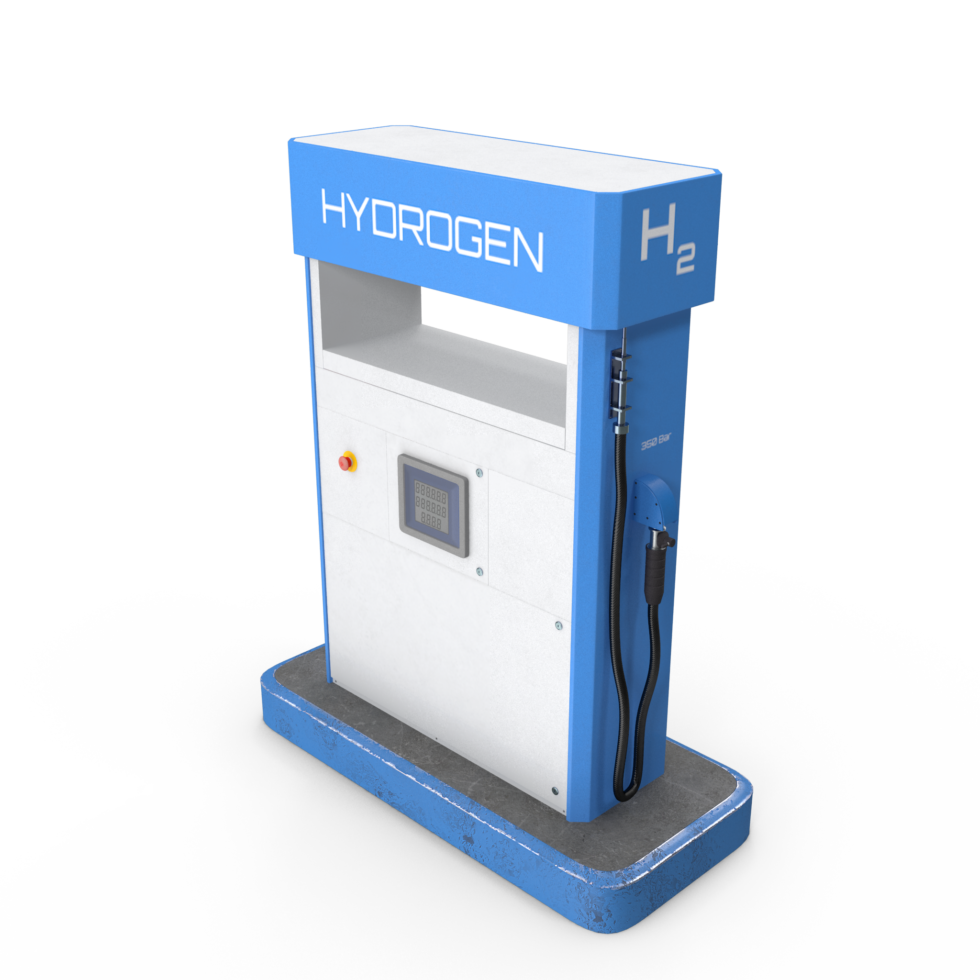
“MeV” Green Hydrogen Generation & Decarbonizing Technology Breakthrough
Powerful Energized “MeV” Reaction in water, this energized reaction has the ability to break down and separate many elementary structures.

Coal Fired Aquaculture into Green Decarbonizing Carbon Free Plants
Turning any coal powered power station green and may become eligible to create carbon credits while decarbonizing the planet, all while burning coal
CumminsCorp H2O Australasia Pty Ltd
- Portable Containers
The shipping containers are portable, and relocatable.
- Less Space
Compact Green Energized “eV” Generators each require less than 1.5 square meters in area.
- No Heat
No heat is created within this “Cummins Energized Cold Plasma “eV”” Green Hydrogen Generation system.
- Cost-effective Technology
Hydrogen gas may be produced for far less than 0.01 cents for 25 to 50 liters using mains generated power @ 25 cents per KWH.
Contact us today to discuss the opportunity
Call us
+61 447 337 933
Write to us
david@cumminscorph2o.com
Investing in the future
CumminsCorp H2O Australasia Pty Ltd, a newly formed company established to exploit the intellectual property, “Patents Pending” Australia, including Licensing, designs, and know-how, which has been developed to produce Hydrogen gas by breaking down Methane (CH4) and similar carbon based gases, desalinate, and purify water by using groundbreaking electron-Volts (eV) Technology technology.
Answers for Every Question Below
Our technology centres on precision quantum-tuned chemistry. Instead of using massive thermal heat or macro-scale electrical currents to break apart molecular structures, our proprietary reactors deliver highly targeted energy packets scaled strictly within the low-energy electron volt (eV) spectrum.
In molecular physics, eV represents a critical energy threshold. It is the exact "sweet spot" required to efficiently cross the ionization and dissociation thresholds of targeted liquid and gas molecules. By delivering energy precisely at this quantum threshold, we can cleave chemical bonds instantly, bypassing the massive energy losses and inefficiencies that occur when trying to force the same reaction using standard macroscopic methods.
Traditional electrolysis relies on continuous electrical current passing through a medium, which suffers from severe efficiency losses due to electrode degradation, fluid resistance, and waste heat generation. Thermal cracking requires massive inputs of burning fossil fuels to achieve high temperatures. CumminsCorp H2O does not boil the liquid or force macro-currents through it; we target individual molecular bonds with exact eV inputs, keeping the process highly efficient, localized, and thermally stable.
No. To clarify a past nomenclature overreach: our technology operates strictly at the microscopic eV (electron volt) scale, not the MeV (Mega-electron volt) scale. Operating at the eV scale means our system works safely within standard atomic and chemical bond limits. It does not involve nuclear reactions, particle accelerators, high-voltage hazards, or dangerous ionizing radiation shielding. This ensures our modular units are safe, rapidly deployable, and universally compliant with standard environmental regulations.
Yes. The underlying physics and modular reactor architecture are scaled directly from real-world operations. The foundational mechanics of this exact eV-scale approach were previously deployed and commercially validated under I.C.E. International Inc. during our operations in Pampanga. CumminsCorp H2O Australasia has taken that proven operational data and refined it into a scalable, next-generation asset ready for the global market.
Because our reactors operate efficiently at the precise eV scale, they feature a remarkably compact physical and energy footprint. The units are fully modular, designed to scale in line with existing commercial infrastructure, and run on standard commercial grid power or localized renewable energy sources without requiring heavy, high-voltage sub-stations.
Traditional carbon credits rely on paper-based estimates and manual third-party audits, which creates tracking gaps and greenwashing risks. CumminsCorp credits are digitally tokenised assets driven by raw physical data. Because our eV modular system operates with a perfectly flat, surge-free power profile, onboard IoT sensors stream uncorrupted performance telemetry directly to a Tier 1 blockchain. This creates an unalterable, automated record of carbon avoidance that eliminates human error and double counting.
The entire validation process is fully automated. Real-time physical carbon avoidance within the module programmatically triggers Tier 1 smart contracts to automate credit verification. The moment the unit achieves a specific, verifiable threshold of energy optimization or contaminant destruction, the smart contract executes natively on the blockchain ledger. This instantly mints the corresponding token and distributes it to institutional-grade registries without a single day of paperwork or administrative delay.
Opaque, nature-based avoidance credits have faced severe market discounts due to permanence issues, often trading below $5 per metric ton. Because CumminsCorp credits will be backed by permanent, engineered resource optimization, they align natively with global Core Carbon Principles. These high-integrity technical assets command a 300% market premium, typically trading between $100 to $200+ per ton in premium asset pools where institutional corporate buyers willingly pay top-tier rates for ironclad ESG compliance.
No. Traditional carbon markets rely on intermediaries who extract an average 5% broker tax to clear and settle transactions manually. By operating directly on a Tier 1 blockchain platform, buyers and sellers interact natively through peer-to-peer liquidity protocols. Smart contracts handle the issuance, transfer, and immediate retirement of the credits for a fraction of a percent, returning that 5% margin straight back to the project's bottom line.
Regulatory frameworks like Europe’s CSRD and CBAM actively penalise low-grade, paper-audited offsets. CumminsCorp H2O will deliver absolute, audit-ready compliance. Because the chain of custody is permanently etched onto a decentralized ledger from the moment of physical destruction, corporate compliance officers can trace every single credit back to the exact hour, location, and gallon of treated wastewater. This turns environmental compliance into a transparent, bulletproof financial asset.